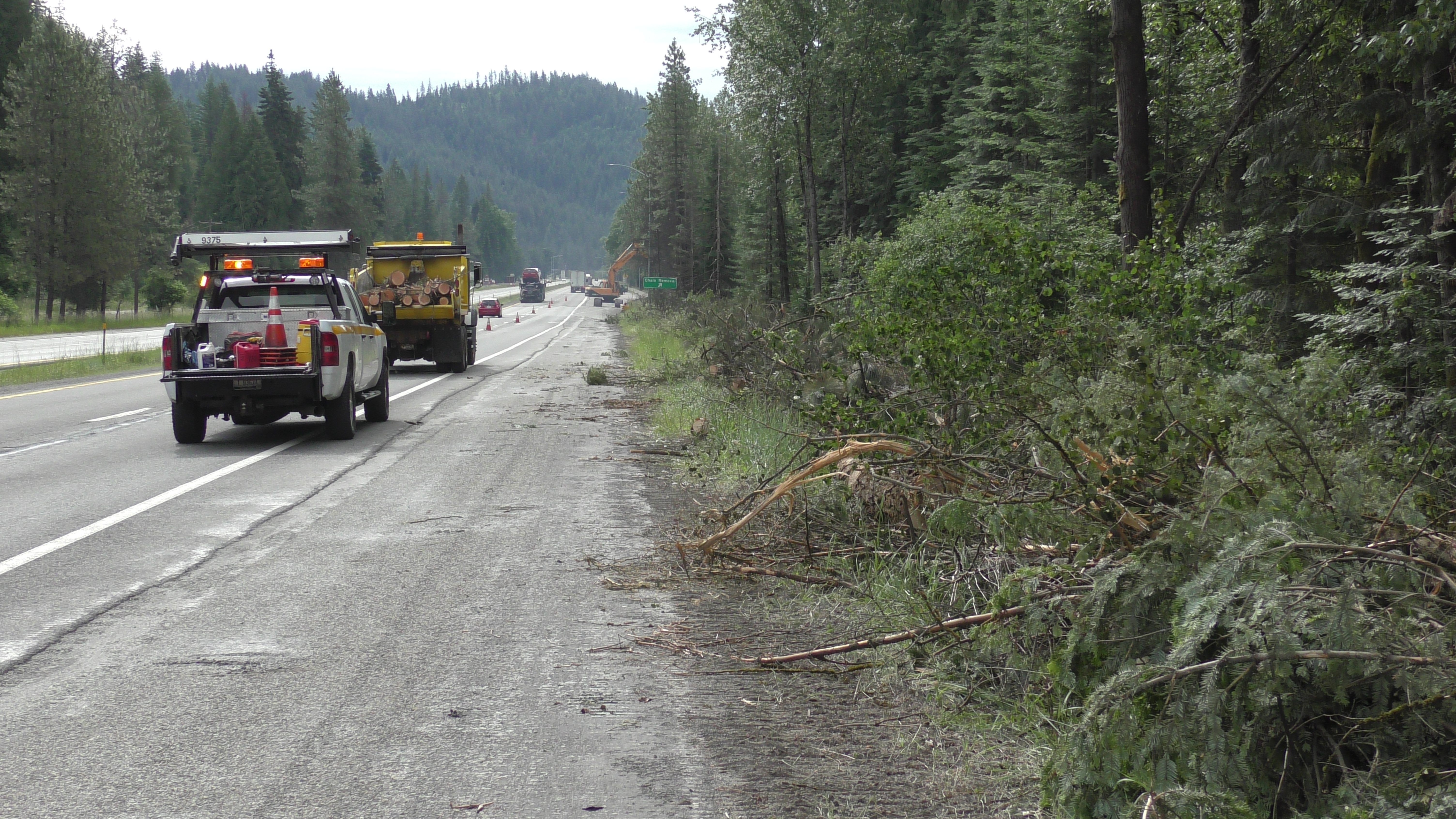
Beginning in late April, contractors will start removing hazard trees along two miles of Interstate 90 near Fourth of July Pass to enhance highway safety. Trees can be hazardous when they fall, shade roadways and cause icy conditions in winter as well as hide any approaching wildlife.
Work will last for approximately one month during which travelers can expect work on the shoulders. Trees on the eastbound side will be removed first, followed by trees on the westbound side.
Drivers may encounter single-lane or possibly two-lane closures of I-90. Full closures will be less than 10 minutes and may be necessary when logging tall or dead trees near the interstate. Crews will determine the need for and timing of these closures on site.
The contractor will remove dead and dying trees from 200 acres of state property while also harvesting other trees in the area to cover operating costs.
“It’s important to do this work when we can because trees can fall on the road or act as obstacles when people drive off the road,” operations engineer Jerry Wilson said. “We’ve found a way to let experts remove these trees at no extra cost to the taxpayers, while enhancing their safety.”
In the past, ITD has hired help to remove trees that could not be safely removed with its own employees and equipment, with a recent contract charging $1,000 per tree. View a picture from work last year to remove hazard trees.
“Given the number of trees that need to be removed in this section, that wasn’t feasible,” Wilson said. “If this process works well, ITD could continue to use similar partnerships to increase safety along the entire corridor.”
Watch a video advertising the upcoming work or visit the project website at itdprojects.org/i90trees.